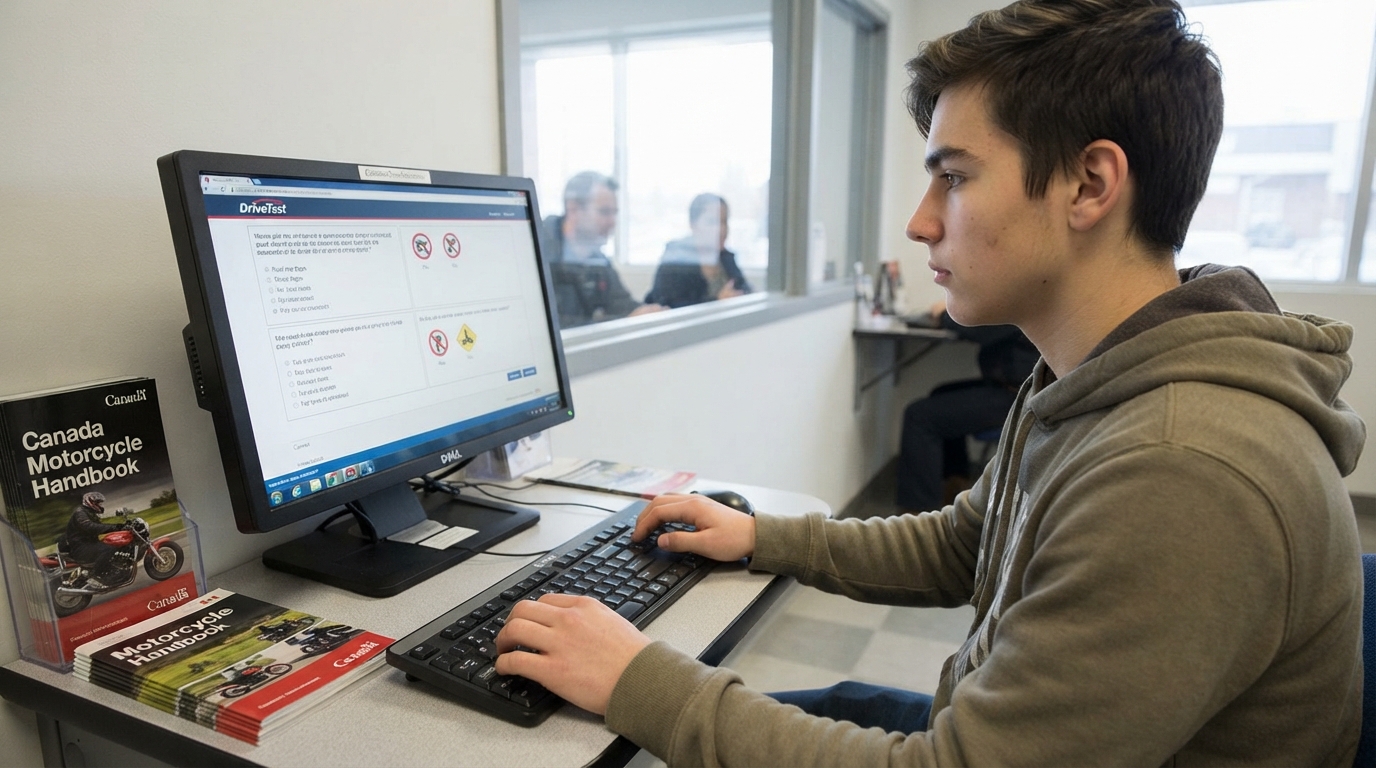
Getting a motorcycle licence in Canada is an important step for anyone who wants to ride legally and confidently. Unlike learning to drive a car, motorcycle licensing places particular emphasis on balance, vehicle control, hazard awareness, lane positioning, protective equipment, and safe riding techniques. The exact process, however, is not identical across the country. Each province and territory sets its own licensing requirements, testing procedures, licence classes, and training rules.
For prospective riders, understanding what to expect before booking a test can make the process much less stressful. A good preparation plan should cover both the written knowledge test and the practical riding assessment, while also allowing enough time to develop real-world riding skills.
Table of Contents
How Motorcycle Licensing Works in Canada
Canada does not have one single nationwide motorcycle licence test. Motorcycle licensing is administered by individual provinces and territories, so the steps can vary depending on where you live.
For example, Ontario requires applicants to pass a vision test and written knowledge test before receiving an M1 licence. Riders then progress through the graduated licensing system and must complete motorcycle road tests unless they use an approved safety-course route where applicable.
Quebec uses a different system. Applicants for motorcycle licences must pass a knowledge test, complete a driving course, and pass both a closed-track test and a road test.
This difference is important because advice that applies in one province may not apply elsewhere. Before studying, riders should always check the current requirements of their provincial licensing authority.
The Motorcycle Knowledge Test
The first major hurdle for many new riders is the written or knowledge test. This test is designed to establish whether an applicant understands the rules, signs, motorcycle-specific safety principles, and basic riding techniques required to operate a motorcycle responsibly.
Ontario’s official motorcycle handbook, for example, states that knowledge-test questions can cover traffic rules, road signs, motorcycle controls, lane position, steering control, equipment requirements, helmets, passenger and cargo rules, dangerous road surfaces, gear shifting, and motorcycle maintenance.
This means simply memorising road signs may not be enough. A candidate should understand why particular riding practices are recommended.
Important subjects to study include:
- Traffic signs and signals
- Right-of-way rules
- Motorcycle controls
- Lane positioning
- Speed management
- Braking techniques
- Gear selection and downshifting
- Turning procedures
- Safe following distances
- Hazard recognition
- Protective equipment
- Passenger and cargo considerations
- Motorcycle maintenance
In Quebec, the knowledge test is divided into sections covering motorcycle operation and road rules, signs, pavement markings and traffic signals. The required passing marks differ between those sections.
Preparing for the Written Test
The best place to begin is with the official motorcycle handbook for your province. Commercial practice tests can be useful for familiarising yourself with question formats, but the official handbook should remain the foundation of your preparation.
Instead of trying to memorise every sentence, focus on understanding the principles behind the rules. For example, learn why a particular lane position provides a better safety margin, why motorcycle stopping distances can change with road conditions, and how riders should respond when approaching an unexpected hazard.
It can also help to divide your study into smaller sections. Spend one session on signs and traffic laws, another on motorcycle controls, and another on defensive riding techniques. After reviewing each section, test yourself without looking at the answers.
This approach helps identify weak areas before test day.
The Practical Motorcycle Test
Passing the written test does not demonstrate that someone is ready for real-world motorcycle riding. Practical testing evaluates how effectively the rider can control the motorcycle while following traffic laws and responding to normal road situations.
The exact assessment varies between jurisdictions.
Ontario, for instance, has two motorcycle road tests within its graduated licensing system. The M2 test evaluates basic riding skills, while the full M test assesses more advanced skills and includes a highway component.
Quebec’s road assessment includes situations such as entering traffic, travelling in a straight line, stopping, crossing intersections, and turning. Examiners look at factors including visual checks, lane position, speed management, control of the motorcycle, braking and right-of-way decisions.
These examples demonstrate why riders should practise complete riding behaviours rather than focusing only on individual manoeuvres.
Skills Worth Practising Before Test Day
A motorcycle test can involve several skills that should become automatic through practice.
Starting and Stopping
Smooth starts demonstrate control over the clutch, throttle and motorcycle balance. Riders should also practise controlled stops using both brakes appropriately.
Turning
A safe turn involves more than simply steering the motorcycle. Riders need to approach at an appropriate speed, check surrounding traffic, position themselves correctly and maintain control throughout the manoeuvre.
Lane Position
Motorcycles have different visibility and space requirements compared with larger vehicles. Correct lane positioning can improve visibility and provide additional space from surrounding traffic.
Intersections
Intersections require careful observation because vehicles can approach from several directions. Riders should practise checking for traffic, signs, signals and potential hazards before proceeding.
Lane Changes and Merging
Changing lanes requires observation, signalling and appropriate positioning. Riders should develop the habit of checking their surroundings rather than relying on mirrors alone.
Hazard Awareness
A motorcycle rider needs to anticipate potential hazards rather than react to them at the last moment. Wet pavement, gravel, parked vehicles, opening doors, pedestrians and changing traffic patterns can all require adjustments.
Protective Equipment Matters
Safety equipment is not simply something to think about after receiving a licence. Riders should become comfortable wearing appropriate protective equipment during training and testing.
Helmet requirements are established by provincial regulations. Ontario’s DriveTest guidance, for example, requires a helmet that complies with the applicable provincial regulation for motorcycle road tests.
Quebec has specific protective-equipment requirements for its motorcycle testing process, including appropriate gloves, long pants and suitable footwear, and recommends additional protective clothing and a full-face helmet.
Before arriving for a test, candidates should check their provincial authority’s current requirements. A rider can be technically prepared but still face problems if the motorcycle or required equipment does not meet testing rules.
Check the Motorcycle Before the Test
The motorcycle itself is another important part of preparation.
A test vehicle should be mechanically sound, properly registered and insured where required, and suitable for the licence class being tested. Controls should work correctly, tyres should be in suitable condition, lights should function, and mirrors should be properly adjusted.
Ontario’s DriveTest guidance specifically advises candidates to bring a motorcycle in good working order, along with their licence and required helmet.
Quebec similarly requires the motorcycle used for its road test to be registered, insured and in good mechanical condition.
Checking these details before leaving home can prevent an otherwise avoidable problem on test day.
Common Preparation Mistakes
One common mistake is treating the test as an examination that can be passed through memorisation alone. Motorcycle riding is a physical skill, and practical ability develops through supervised practice and repetition.
Another mistake is practising only in an empty parking lot. Low-speed manoeuvres are useful, but riders also need experience with intersections, lane changes, traffic, road surfaces and other normal conditions within the limits of their learner licence.
Some candidates also become too focused on avoiding mistakes. Excessive nervousness can lead to abrupt braking, poor observation or unnecessary corrections. A better approach is to build consistent riding habits during training so that essential actions become natural.
Finally, riders should not assume that requirements remain unchanged indefinitely. Licensing authorities periodically update procedures, fees, testing arrangements and eligibility requirements. Checking official information before booking is therefore essential.
Where to Find Motorcycle Licence Information
For riders researching the licensing process, Canadianbiker.ca can also be a useful source for motorcycle-related information and resources.
However, provincial licensing authorities should be treated as the final source for official requirements, because they control the actual licensing process. Ontario’s government and DriveTest provide official information for Ontario riders, while Quebec’s SAAQ publishes its motorcycle licensing requirements and testing procedures.
Final Thoughts
Preparing for a motorcycle licence test is about more than learning how to pass an examination. The knowledge component helps riders understand traffic laws and motorcycle-specific risks, while practical testing provides an opportunity to demonstrate control, observation and safe riding behaviour.
Because Canada’s licensing system is provincial, candidates should first identify the exa there, studying the official handbook, taking appropriate training, practising essentialct licence class they need and then follow the requirements in their jurisdiction. From riding skills and checking the motorcycle and safety equipment can make the testing process much more straightforward.
Most importantly, passing the test should be viewed as one stage in becoming a capable rider. Continued practice and responsible decision-making remain important long after the licence has b iseesued.